New Discoveries in the Universe
New Discoveries in the Universe
We are stepping up our efforts to explore the universe. In the past, scientists have made many strange new discoveries about the mysterious universe, each of which has the potential to reshape human understanding of the universe.
There is a poisonous oil floating in space. A study from the University of New South Wales, Australia, found that there are large amounts of oil atoms in the dust that widely exists in interstellar space. Research data show that 1 million hydrogen atoms contain 100 oil and carbon atoms, which account for 1/4 of the total carbon in the universe.
The core of a neutron star has a "nuclear pizza" 10 billion times harder than steel. Neutron stars are the most dense celestial bodies in the universe. If the earth's density becomes so large, then the earth's volume is only as big as football. The nuclei of matter in a neutron star are squeezed tightly by gravity to form a dense mass of nuclear matter composed of neutrons and protons.
A star in the backyard of the solar system suddenly darkened by 80%, which could not be explained by the "Dyson Ball". In most galaxies, the light of the main star does not darken by more than 3%, which is due to the occlusion around the planetary sphere. Even if hijacked by an alien, the KIC 8462852 star with the "Dyson Ball" has the most variable and dim light by 22%.
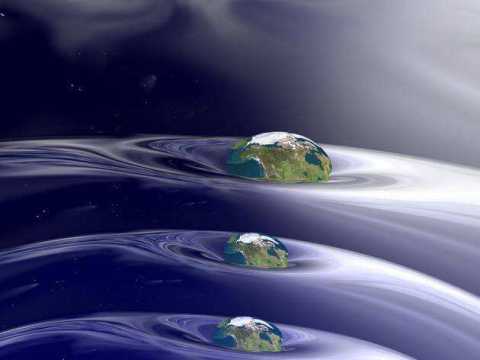
There are 100 billion wandering planets in the Milky Way, and scientists suspect that one has ever been to the solar system. A new study from Leiden University in the Netherlands has found planetary derailments in several galaxies in the Milky Way. Scientists have studied a number of galaxies in the Orion Nebula and determined that the rate of planetary derailment in the galaxy is about 16.5%.
Comments
Post a Comment