Knowledge about the Beautiful Lupinus
Knowledge about the Beautiful Lupinus
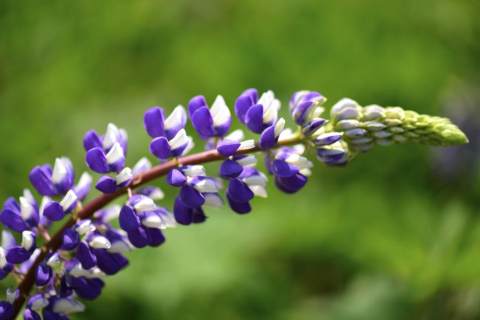
The genus includes over 200 species, with centers of diversity in North and South America. Smaller centers occur in North Africa and the Mediterranean. They are widely cultivated, both as a food source and as ornamental plants.

The species are mostly herbaceous perennial plants 0.3–1.5 m (0.98–4.92 ft) tall, but some are annual plants and a few are shrubs up to 3 m (9.8 ft) tall. An exception is the chamis de monte of Oaxaca in Mexico, which is a tree up to 8 m (26 ft) tall.

Lupins have soft green to grey-green leaves which may be coated in silvery hairs, often densely so. The leaf blades are usually palmately divided into five to 28 leaflets, or reduced to a single leaflet in a few species of the southeastern United States.

The flowers are produced in dense or open whorls on an erect spike, each flower 1–2 cm long. The pea-like flowers have an upper standard, or banner, two lateral wings, and two lower petals fused into a keel. The flower shape has inspired common names such as bluebonnets and quaker bonnets. The fruit is a pod containing several seeds that weight in average 24,8 mg each.

Many annual species of lupins are used in agriculture and most of them have Mediterranean origin. While originally cultivated as a green manure or forage, lupins are increasingly grown for their seeds, which can be used as an alternative to soybeans.
The copyright belongs to unsplash.

Comments
Post a Comment